Why Facebook Automation Tools Can Fail and How to Avoid Common Pitfalls
Facebook automation tools can significantly enhance the efficiency of your marketing efforts, but they often fall short due to various reasons. Understanding these pitfalls is crucial for successfully leveraging these tools.
Understanding Common Reasons for Failure of Facebook Automation Tools
Identifying Key Pain Points
Many businesses experience frequent failures with their Facebook automation strategies. The primary issues often include a lack of engagement from the audience and poor targeting of advertisements. According to recent studies, 63% of marketers report that lackluster performance in social media campaigns stems from misaligned messaging and inadequate audience targeting. Furthermore, 74% of users feel inundated with irrelevant content, leading them to disengage from brands.
For example, a case study involving a mid-sized retail brand revealed that their automated posts generated only 50% of expected engagements due to failing to segment their audience effectively. These statistics underscore the necessity for targeted strategies when employing automation tools.
Setting Realistic Expectations for Automation Outcomes
Defining Clear Objectives Before Implementation
Before implementing any Facebook automation tool, it's imperative to define clear objectives. Users should determine whether their goals are oriented towards increasing engagement or merely boosting follower counts. Misaligned expectations can lead to dissatisfaction; for instance, aiming solely at follower counts without engaging content results in stagnant growth and ultimately decreased brand loyalty.
Research indicates that brands focusing on engagement metrics see a significant improvement in customer retention rates—upward by 12% compared to those who prioritize just follower count alone.
Importance of Quality Content in Automated Posts
Crafting Engaging and Relevant Content Automatically
Creating engaging content automatically isn't just about scheduling posts; it requires thoughtful planning through a well-structured content calendar. A successful approach includes determining posting frequency, optimal timing based on analytics insights, and tailoring content according to audience preferences.
To establish an efficient workflow:
- Content Calendar: Develop monthly themes tied closely with brand messages.
- Frequency & Timing: Utilize analytics from previous posts to identify peak engagement times.
- Audience Preferences: Conduct surveys or utilize feedback mechanisms integrated into your automated systems.
Incorporating dynamic elements such as polls or user-generated content can also foster higher levels of interaction.
Technical Setup: Proper Configuration Matters
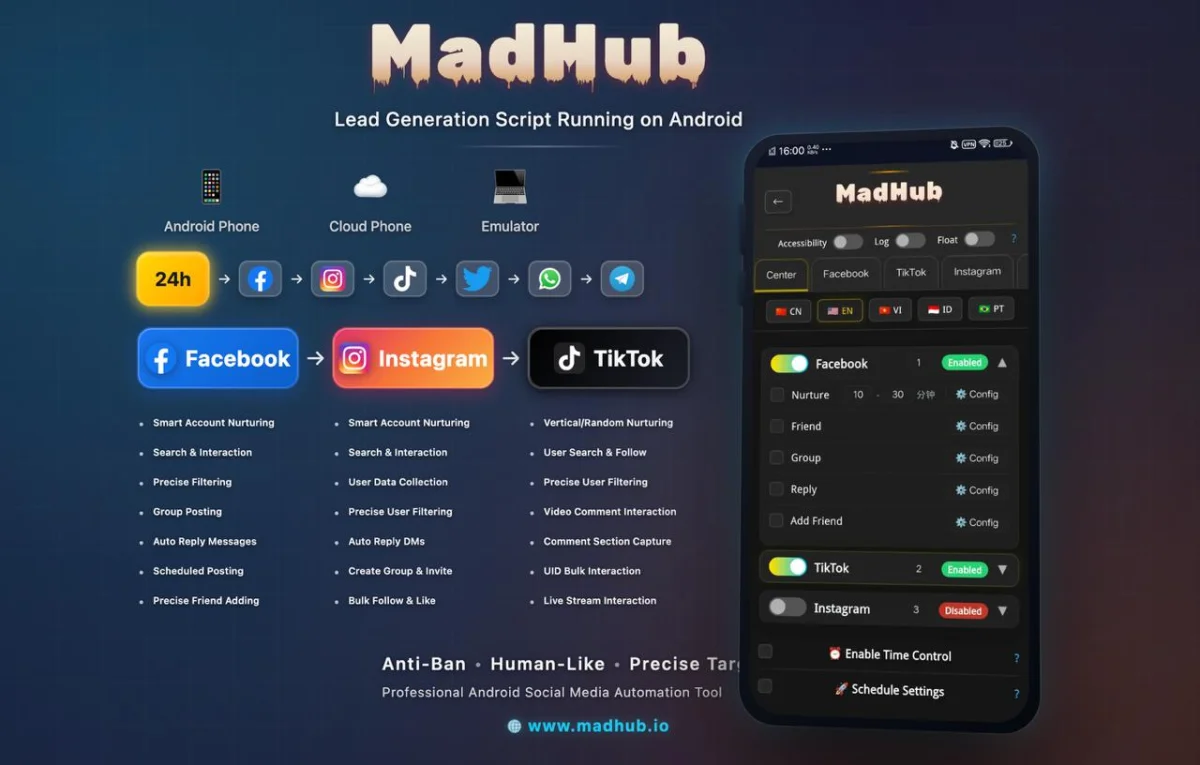
Step-by-Step Guide to Configuring Your Facebook Automation Tool
The technical setup is critical when using any Facebook automation tool such as MadHub:
- Download MadHub: Ensure you have it installed on your Android device or cloud phone.
- Set Up Account Details: Input the necessary login credentials securely.
- Configure Settings:
- Navigate to 'Settings' > 'Post Configurations.'
- For interactive features like comments or likes under "Facebook养号功能", set interaction probabilities (e.g., liking every third post).
- Schedule Posts:
- Go back to the dashboard -> select 'Scheduled Posting'.
- Choose specific dates/times based on your previously identified optimal posting times.
- Engagement Monitoring: Activate automatic replies under "Facebook自动回复功能" by configuring response time intervals (e.g., respond within five minutes).
Visual aids should accompany each step where possible for easier understanding during setup procedures.
Monitoring Performance Metrics Post-Automation
Analyzing Engagement Rates and User Interaction Data
It’s vital not just to automate but also continuously monitor key performance indicators (KPIs) such as reach, impressions, clicks-to-engagement ratio during campaign runs post-automation implementation:
- Establish benchmarks prior so progress can be easily tracked against historical data.
- Adjust tactics promptly if KPIs do not meet defined thresholds; this could involve tweaking post timings or adjusting target demographics accordingly based on real-time data analyses provided by MadHub's dashboard functionalities.
For instance, analyzing trends showed that one business increased interactions by 35% after shifting posting schedules aligned better with user activity patterns observed over four weeks’ worth of monitoring data.
Handling Negative Feedback from Automated Interactions
Strategies for Managing Customer Responses Effectively
Handling negative feedback while utilizing automated responses necessitates maintaining an authentic connection despite technological mediation:
- Set guidelines ensuring automated messages carry empathetic tones rather than seeming robotic. 2.Use triggers within MadHub's system allowing personalized replies reliant upon keywords found in customer queries leading toward more tailored interactions resembling human-like dialogue structures rather than generic responses reflecting solely pre-set templates used previously encountered scenarios labeled as “frequently asked questions” (FAQs).
A successful strategy was employed by many top-tier brands responding personally—an example being Starbucks—which personally addressed concerns raised via social channels even amidst high-volume traffic periods without compromising authenticity throughout communication processes established therein enjoyed positive outcomes overall ultimately retaining loyal clientele bases spanning longer-term investments cultivated subsequently thereafter!
Adjusting Your Strategy Based on Analytics Insights
Iterative Improvement through Data Analysis
Regularly reviewing analytics helps marketers adapt strategies effectively over time aligning constantly evolving market trends forged ahead consistently relying heavily upon data-driven decisions derived fundamentally influencing future campaign trajectories shaping broader outreach initiatives extending greater impacts across diverse environments encountered along pathways traversed bringing forth sustainable growth patterns inherently embedded within frameworks developed around best practices anticipated along hubs structured towards collective advancements experienced uniformly throughout enterprises engaged actively therein both horizontally vertically proportionately balanced yielding fruitful results cumulatively enriching experiences relished widely thereof!